Physics
Motion, force, energy and waves, with the mathematics drawn in.
Mechanics, in the order it is built. Motion is described first, then explained by force. Projectiles apply both. Energy and momentum are two quantities that stay fixed and make hard problems short. Oscillation and waves follow, and the last lesson explains orbits with the same second law the series started from.
Start with lesson 1-
1
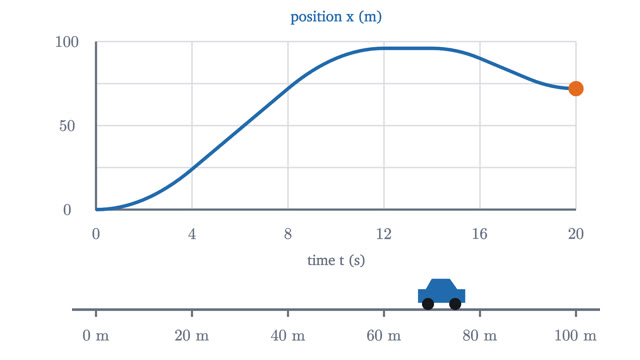
Position, velocity and acceleration: reading motion graphsSlope turns a position graph into velocity and velocity into acceleration; area goes back. The constant-acceleration equations come from one trapezoid.
-
2
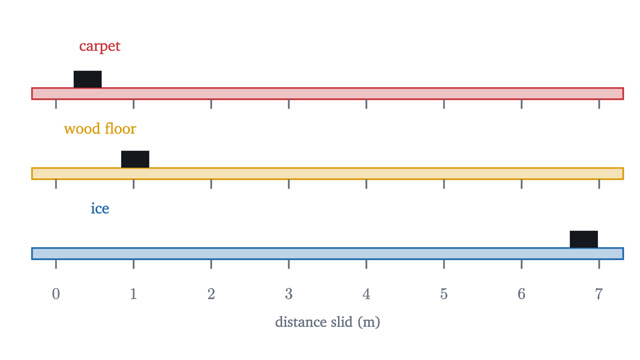
Newton's second law, F = ma: what force really doesForces change an object's velocity; none is needed to keep it moving. Newton's three laws, free-body diagrams, the incline and the Atwood machine in full.
-
3
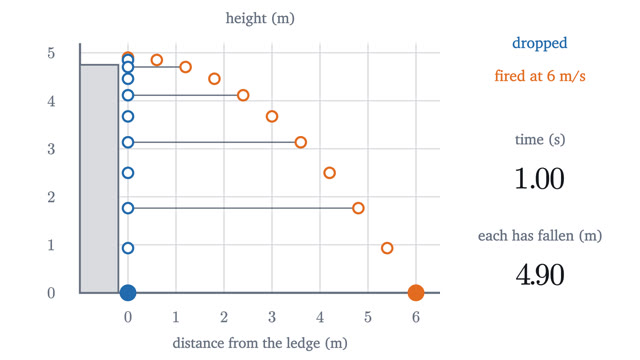
Projectile motion: dropped and fired bullets land togetherGravity acts only on the vertical part of a projectile's motion. From that come the parabola, the time of flight, the range, and why 45 degrees goes farthest.
-
4
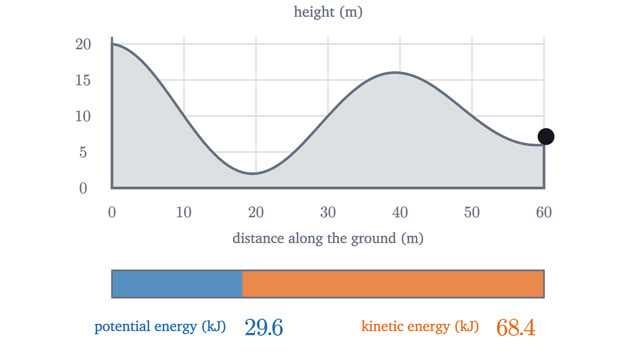
Conservation of energy: a roller coaster's bookkeepingWork, kinetic and potential energy, and the work-energy theorem, derived from F = ma and used to find a coaster's speed anywhere and the height a loop needs.
-
5
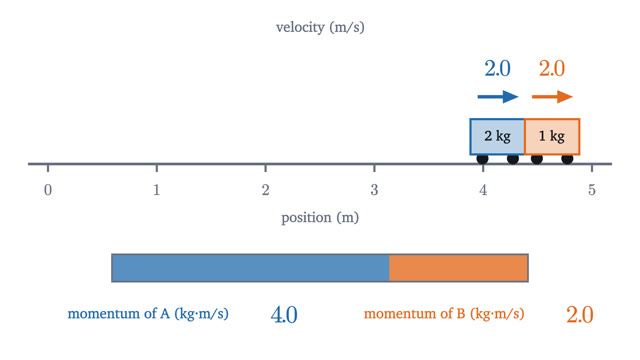
Momentum and collisions: what survives a crashMomentum, impulse and Newton's third law, and how they fix the outcome of sticky and bouncy collisions when energy alone gives the wrong answer.
-
6
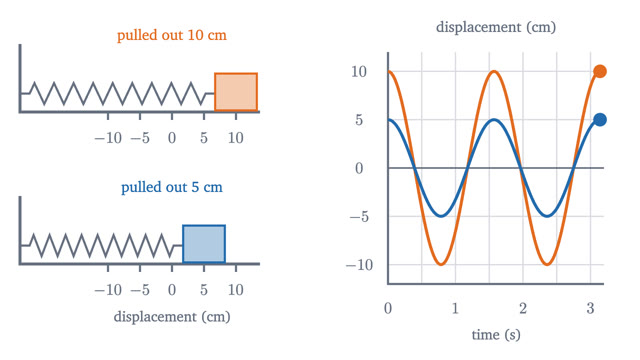
Simple harmonic motion: springs and pendulumsWhy a mass on a spring takes the same time per swing however far it is pulled: Hooke's law and the shadow of circular motion, and why a pendulum nearly does.
-
7
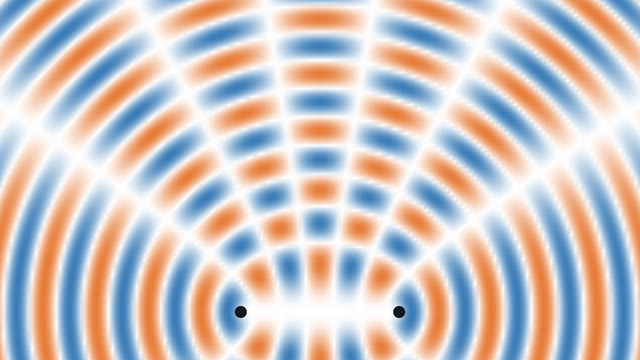
Waves and interference: how two ripples can cancelWhat a wave is, why its speed is frequency times wavelength, and how adding waves gives the quiet lines of an interference pattern and the notes of a string.
-
8
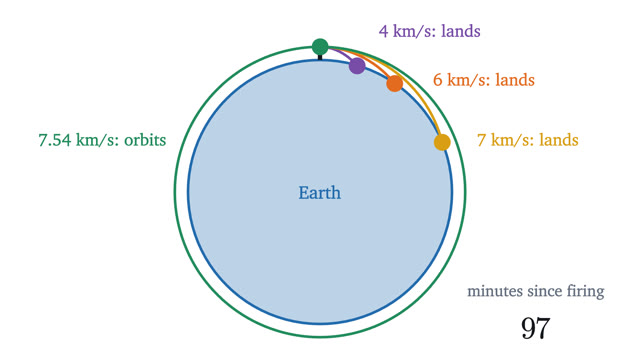
Circular motion, gravity and why the Moon doesn't fallThe acceleration v²/r of circular motion, derived from the velocity triangle, and what it says about satellites, Kepler's third law and weightlessness.