Logic and Proof
What follows from what, and how a proof makes you certain.
The series covers the language proofs are written in. Truth tables, if-then statements and quantifiers come first, since every theorem is built from them. Proof by contradiction is the first full method, sets give the objects, and Cantor's diagonal argument uses all of it to show that infinite sets come in different sizes.
Start with lesson 1-
1
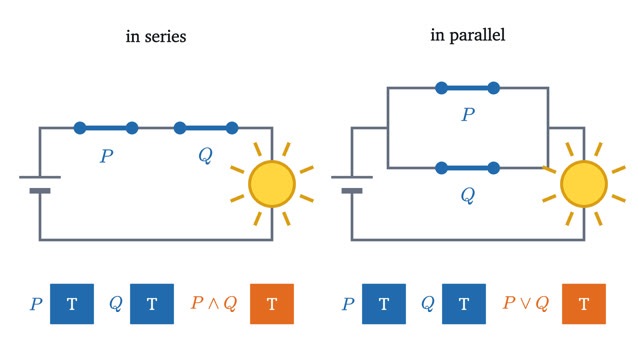
Truth tables: and, or, not as calculationThe word "or" has two meanings in English. Truth tables fix one, and turn questions about what sentences mean into finite calculations you can check row by row.
-
2
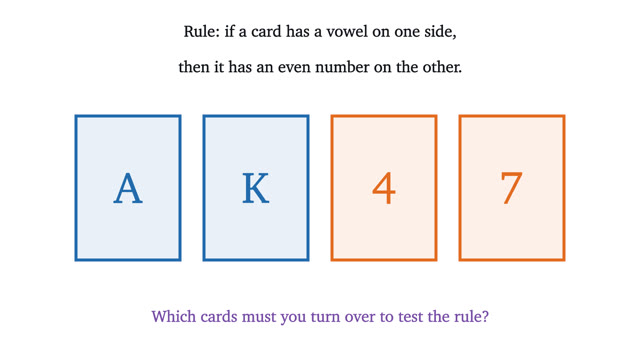
If-then statements: converse and contrapositiveWhen is "if P then Q" true? One table answers it, shows why the contrapositive says the same thing and the converse does not, and solves the four-card puzzle.
-
3
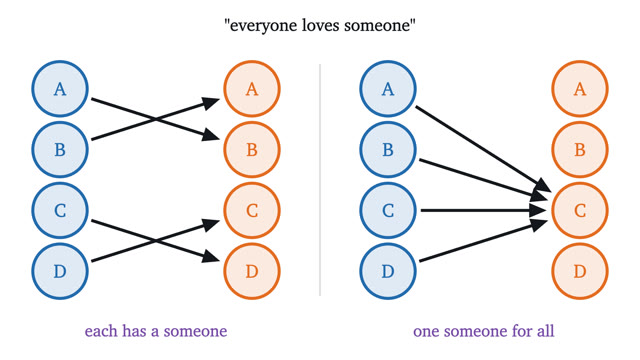
Quantifiers: for all, there exists, and negationEveryone loves someone" has two meanings. Quantifiers separate them, show how to negate each, and turn the epsilon-delta definition of a limit into a game.
-
4
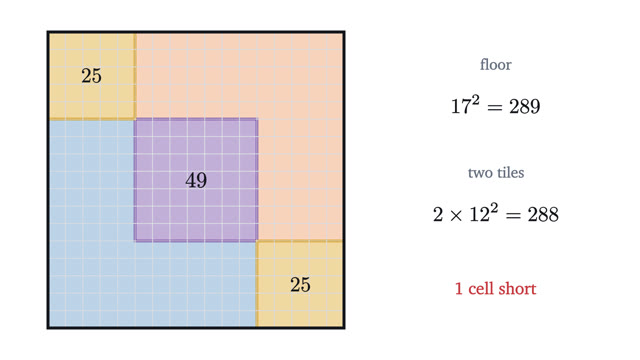
Proof by contradiction: why √2 is not a fractionNo fraction squares to exactly 2. To prove it, assume one does and follow the assumption until it breaks. That method is proof by contradiction.
-
5
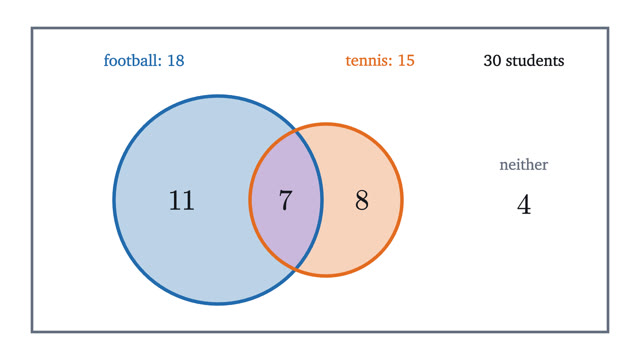
Sets, Venn diagrams and inclusion-exclusionUnion, intersection and complement defined exactly, De Morgan's laws for sets, and how to count a union of overlapping sets without counting anything twice.
-
6
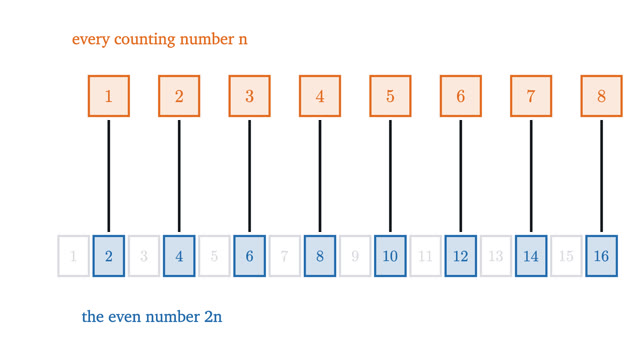
Cantor's diagonal argument: some infinities are biggerSizes of infinite sets are compared by pairing. The integers and the fractions pair off with the counting numbers, and the real numbers provably do not.